SEO for Construction Companies: Win More Projects from Google in 2026
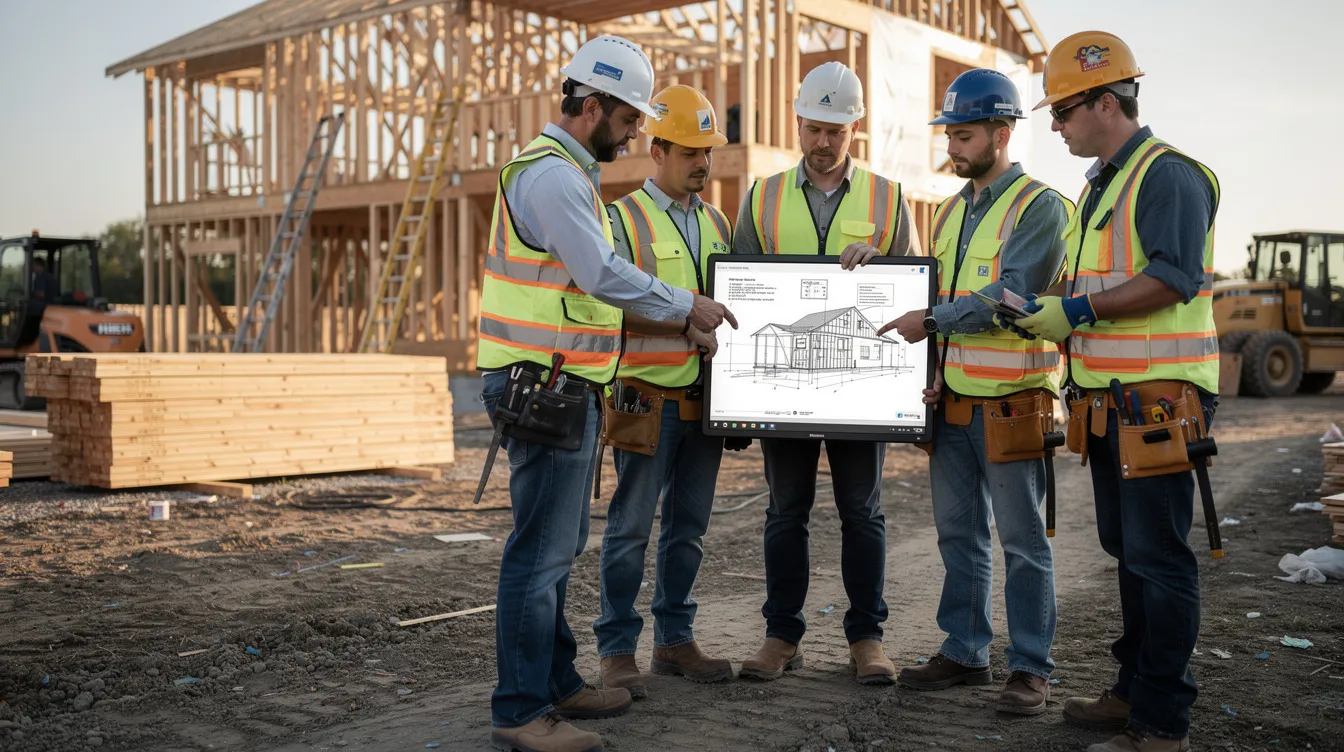
In 2026, most property owners, general contractors, and homeowners start their search for a contractor on Google long before they ask a neighbor for a referral. SEO for construction companies is the practice of turning a construction website into a steady source of project leads - RFPs, bids, estimate requests - without depending solely on paid ads or word of mouth.
The U.S. construction industry tops $3.7 trillion in market size, and a growing share of buyers now research contractors online before inviting anyone to bid. The term “SEO for construction companies” alone generates roughly 2,400 monthly searches, and construction-related queries collectively can attract 1.7 million searches monthly. That volume represents real project dollars.
Construction SEO combines local SEO, project proof, technical SEO, and conversion-focused design to help your firm show up when it matters most.
Here’s what this guide covers:
- What construction SEO actually means
- Why it’s critical for business growth in 2026
- Residential vs. commercial construction seo differences
- Local SEO, keyword research, on-page and off-page seo tactics
- Content strategy, technical seo, and link building
- How to track results and choose the right SEO partner
What Is SEO for Construction Companies?
SEO for construction companies means optimizing construction company websites so they appear when potential clients search phrases like “general contractor near me,” “commercial builder in Dallas,” or “kitchen remodeling contractor Boston.” Construction SEO involves optimizing websites for local search results, building authority through content and backlinks, and making sure your site converts visitors into leads.
It combines several disciplines: technical seo (site speed, mobile design, crawlability), on page seo (service pages, titles, headings), local signals (google business profile, reviews, citations), and off page seo (backlinks from relevant industry sources).
Consider a design-build firm in the Midwest. They might target “design-build contractor Chicago” for their commercial construction work and “industrial warehouse construction Illinois” for their EPC clients. Each phrase serves a different buyer, and each needs its own optimized page.
Construction SEO covers every segment of the construction industry:
- Residential builders and remodelers
- Commercial construction firms (office, retail, healthcare)
- Specialty contractors (roofing, concrete, HVAC, electrical)
- EPC and infrastructure companies
- Design-build and CM-at-risk firms
The common thread is this: if potential customers are searching online for what you build, your site needs to show up in search results.
Why SEO Is Critical for Construction Businesses in 2026
Buyer behavior has shifted permanently. Even clients who receive referrals now vet contractors through search engines before making a call. A facilities manager searching “tenant improvement contractor Phoenix” will review safety records, project portfolios, and reviews. A homeowner searching “bathroom remodel cost 2026” wants detailed pricing content before requesting an estimate. A developer looking for “design-build contractor Orlando” expects case studies proving commercial build experience.
Construction SEO improves online visibility and attracts qualified leads. Benchmark data from regional construction firms shows that organic search accounts for 38–54% of qualified project inquiries for well-optimized businesses. And the economics are compelling: SEO leads cost $25–$45 each at maturity compared to roughly $90 per lead for paid home services ads.
Compare that to traditional advertising - yard signs, mailers, print ads, trade shows. Those tactics are expensive and stop generating leads the moment you stop paying. A well optimized website keeps producing inquiries month after month.
A report from Backlinko shows only 0.63% of searchers click on second-page results. If your construction business isn’t on page one, you’re effectively invisible.
Realistic timelines: most construction companies see early seo movement in 60–90 days and meaningful lead growth between 6–12 months, depending on market competition and existing domain authority.
How Construction SEO Works (Simple Example Walkthrough)
Meet Mike, a remodeling contractor in Denver. A year ago, his construction website was a basic five-page brochure with no blog, no project photos, and almost no search rankings. He was getting 3–4 inbound calls per month from online searches - everything else came from referrals.
Mike hired help to fix his site structure, create dedicated service pages for “basement finishing Denver” and “whole home remodel Denver,” and optimize his google business profile with updated photos, categories, and service areas. He published six project case studies with before/after photos, cost ranges, and timelines. After each completed project, he asked clients for Google reviews.
Within nine months, his organic traffic more than doubled. Inbound inquiries climbed from 3–4 per month to 15+ during peak season. His close rate improved too, because website visitors arriving from search already understood his work and pricing range.
Here’s the mechanism at work:
- Optimize pages with relevant keywords, project proof, and clear calls-to-action
- Google ranks them higher based on relevance, authority, trust, and user behavior
- More owners find you in google’s search results for high-intent queries
- More estimates requested via forms, calls, and emails
- More signed contracts from leads that already trust your proven track record
Key Types of SEO for Construction Companies
Four core types of SEO work together to drive search engine rankings for a construction firm. Each plays a distinct role.
Local SEO
- Optimize your google business profile, Bing Places, and Apple Maps listings
- Build local citations on directories like HomeAdvisor, Angi, Houzz, local chambers, and trade associations
- Maintain consistent NAP (Name, Address, Phone) across every listing
- Local seo helps construction companies appear in local search results where most project decisions happen
On-Page SEO
- Create a dedicated service page for each offering: “concrete contractor,” “tenant improvements,” “site work & excavation”
- Build geographic pages like “commercial contractor in Raleigh, NC”
- Optimize title tags, meta descriptions, headings, and image alt text
Off-Page SEO
- Earn backlinks from suppliers, manufacturers, local news outlets, industry blogs, trade associations, and project partners (architects, engineers)
- Guest posts and PR mentions build your website’s authority over time
Technical SEO
- Technical SEO includes improving site speed and mobile performance
- Ensure secure HTTPS, clean URL structures, XML sitemaps, and passing Core Web Vitals
- Optimize photo-heavy project galleries so they load quickly on any device
Residential vs. Commercial Construction SEO
Residential construction seo and commercial construction seo serve different audiences with different expectations. Getting this distinction right determines whether your seo efforts attract the right leads.
Residential SEO targets homeowners making emotional, design-driven decisions. They search phrases like “kitchen remodel ideas 2026,” “home addition contractor Atlanta,” or “how much does a bathroom renovation cost.” Your residential seo pages should feature before/after photography, design inspiration, budget ranges, financing options, and warranty details. The tone is visual, approachable, and lifestyle-oriented.
Commercial SEO targets developers, facility managers, and procurement teams. Their searches look different: “office build-out contractor Houston,” “design-build warehouse construction,” or “GMP cleanroom contractor.” Commercial seo pages need to emphasize safety records, project schedules, delivery models (CM at Risk, design-build, EPC), and compliance credentials (OSHA, LEED, ISO). The tone is technical, professional, and data-rich.
Practical steps for serving both segments:
- Create separate navigation sections or tabs for residential and commercial work
- Build tailored case studies with metrics relevant to each audience
- Use different testimonials - homeowner quotes for residential, developer or owner-rep endorsements for commercial
- Target distinct keyword clusters for each segment
- Adjust calls-to-action: “Schedule a Design Consultation” for residential, “Request a Pre-Qualification Package” for commercial
A construction business that lumps everything together risks confusing both audiences - and ranking well for neither.
Local SEO: Winning Jobs in Your Service Area
Local SEO is critical for construction companies due to location-dependent services. Most construction projects are awarded within specific cities, counties, or metro areas. Ranking in local search results is where the highest-converting traffic lives.
SEO for construction companies targets specific local keywords like “concrete driveway replacement Columbus,” “metal building contractor San Antonio,” or “commercial roofer near me.” Targeting local keywords increases visibility for construction services in the exact markets you serve. Construction companies should target location-specific keywords for local SEO, and creating location-specific landing pages improves local seo effectiveness.
Google Business Profile optimization is the foundation. Optimizing google business profile boosts local visibility significantly, and a complete google business profile enhances trust with potential clients. Here’s what to nail:
- Select accurate business categories and define your service areas
- Write a keyword-rich business description
- Upload photos of completed projects regularly
- Post updates about recent project milestones
- Answer Q&A questions promptly
Local seo can increase traffic to construction websites by 30% or more. Firms ranking in the Local Pack (the map 3-pack on google maps) capture 40–55% of mobile clicks for relevant queries.
Local citations matter too. Ensure your business name, address, phone number, and URL are identical on every listing - your construction website footer, online directories, local listings, and local websites.
Reviews drive decisions. Online reviews significantly influence customer decisions in construction. Positive online reviews enhance local seo rankings and credibility. Positive reviews improve your business credibility online. Encouraging client testimonials boosts trust and local seo rankings.
Ask after every successful project. Send a follow-up email with a direct link to your Google review page. Responding to reviews - both positive and negative - shows you value customer feedback.
A local seo strategy built on these elements gives local businesses a decisive edge. One NYC construction firm saw calls increase 783% in 60 days after overhauling their GBP, cleaning up citations, and ramping up review acquisition.

Keyword Research for Construction Firms
Keyword research is how you discover what potential clients search when they need construction services. In construction terms, keywords fall into clear categories:
- Services: “tilt-up concrete contractor,” “commercial roofing repair”
- Locations: “in Charlotte NC,” “near me,” “serving North Texas”
- Facility types: “school construction,” “hospital renovation,” “warehouse build-out”
- Problems: “fix foundation crack,” “leaking commercial roof repair”
Using long-tail, service-specific keywords increases the likelihood of attracting high-intent customers. A broad term like “contractor” is nearly impossible to rank for. But “metal building construction in Tulsa” or “roofing contractor in Mesa AZ” connects you directly with buyers ready to hire.
The term “Construction SEO” has 1,600 monthly searches with a keyword difficulty of 18 - manageable for most firms willing to invest in quality content. Using specific keywords improves chances of appearing in local search results.
Tools to use: Google Keyword Planner, Google Search Console, Ahrefs, SEMrush, and free tools like Google Autocomplete and People Also Ask. Competitor site analysis is also valuable - look at what top-ranking construction company websites in your market are targeting.
Prioritize by business value. Focus on relevant keywords tied to higher-margin work first: custom homes, commercial tenant improvements, industrial construction. Build keyword clusters around each high-value service. For “metal building construction in Tulsa,” create supporting web pages covering design options, pricing factors, permitting requirements, and project case studies.
On-Page SEO for Construction Company Websites
On page seo is how you structure and write each page of your construction website so search engines and humans both understand what you do and where you work.
Construction websites should have dedicated service pages tailored to specific projects and locations. Here’s the page structure every construction firm needs:
- Homepage with clear positioning, top services, and geographic focus
- Service category pages (new construction, remodeling, design-build, civil work)
- Specific trade pages (a roofing contractor page, concrete, HVAC, electrical)
- Location/service area pages for each city or county you serve
- Project portfolio with high-quality project case studies that build trust and improve search visibility for construction companies
- About/company page with licenses, safety record, and team bios (consider an us page format)
- Contact/estimate request page with simple forms
Title tags and meta descriptions should include your service plus location plus one differentiator. Example: “Commercial General Contractor in Phoenix, AZ | Office & Industrial Construction - LEED Certified.” Write meta descriptions that mention years of experience, key services, and a reason to click.
Use H1/H2 headings that clearly describe each service page topic. Image alt text should reflect actual project details - “steel frame erection for 120,000 sq ft warehouse in Dallas” rather than generic “construction photo.”
Build internal links between related services and project case studies. If your commercial roofing page mentions a completed warehouse project, link to that case study.
Include trust building elements on every page: licenses, insurance certificates, safety awards, union affiliations, and association memberships (AGC, ABC, NAHB). These signals help both search rankings and conversion rates for your target audience.
Content Strategy: Turning Construction Expertise into Traffic & Leads
Every construction business has deep expertise in permitting, inspections, scheduling, materials, and safety. Content should answer common customer questions and showcase expertise - that knowledge is exactly what your target customers are searching for.
Construction SEO involves creating helpful, optimized content. Educational content addressing common customer questions helps establish authority and attract site visitors. High-quality content can improve website authority and earn backlinks from other websites naturally.
Content types that perform well:
- Project spotlights with cost ranges, timelines, and before/after photos
- Step-by-step guides: “How long does a bathroom remodel take in 2026?”
- FAQs about local building codes and permitting processes
- Checklists: “Pre-construction checklist for warehouse fit-outs”
- Comparison posts: “Design-bid-build vs. design-build for schools”
Write in the language your clients use. A homeowner searches “fix my sagging floor,” not “structural floor joist remediation.” Match the search intent of real people.
Multimedia matters. Use professional photos of construction projects, drone footage, timelapse build videos, and downloadable PDF guides. These improve engagement and dwell time, which signals helpful content to search engines.
Plan a content calendar around seasonal demand and your service mix. Roofing and exterior work content performs best in spring. Interior remodel content peaks in winter when homeowners plan projects. Aim for 2–4 pieces per month, each tied to a specific service, city, or buyer question.
Every content piece needs a clear call-to-action: “Request a Free Estimate,” “Download Our Pre-Construction Guide,” or “View Our Recent Projects.”
Technical SEO & User Experience for Construction Websites
Technical SEO ensures search engines can crawl and index your construction website efficiently. Poor technical health means even great content never gets seen.
Page speed directly affects user experience and search rankings. Construction websites with heavy project galleries are especially vulnerable to slow load times. Google prioritizes websites that offer a better user experience, and a slow site costs real projects when owners give up and call a competitor instead.
60% of internet searches are conducted on mobile devices. Mobile-friendly designs are essential as many users search for contractors using mobile devices - whether they’re homeowners on the couch or project managers on the jobsite. Site speed and mobile responsiveness aren’t optional.
Technical priorities for construction firms:
- Pass Core Web Vitals (Largest Contentful Paint, Cumulative Layout Shift, Interaction to Next Paint)
- Ensure HTTPS security across all pages
- Use clean URL structures: /services/commercial-roofing/houston/ rather than messy query strings
- Submit XML sitemaps and fix crawl errors in Search Console
- Compress and lazy-load project gallery images
- Test contact forms and click-to-call buttons regularly
UX best practices:
- Organize navigation by service types and industries (healthcare, education, industrial)
- Place “Request a Quote” buttons above the fold on every service page
- Display phone numbers prominently
- Keep estimate request forms short - name, email, phone, project type, zip code
Use Google PageSpeed Insights and Lighthouse to diagnose issues. Test on real phones and tablets, not just desktop browsers. A strong online presence starts with a site that actually works for the people trying to hire you.
Link Building & Online Authority in the Construction Industry
Backlinks from relevant websites act as votes of confidence for your construction company websites. Building quality backlinks signals credibility to search engines and improves rankings, especially for competitive terms like “commercial contractor [city]” or “industrial concrete contractor.”
Off page seo for construction firms doesn’t require shady tactics. It requires relationships - the same kind you already build on every project.
Realistic link sources for a construction business:
- Supplier and manufacturer partner pages (concrete, steel, roofing systems)
- Trade associations: AGC, ABC, NAHB member directories
- Local chambers of commerce and economic development groups
- Architecture and engineering partners’ project portfolio pages
- Local business journals and newspapers covering project completions
- Sponsor pages for local events, youth sports, or charity builds
PR-style tactics work well. Share major project wins with local media. Write guest articles about building trends for industry publications. Get quoted as an expert on materials costs or code changes. These efforts build your website’s authority and your firm’s reputation simultaneously.
Co-branded case studies are especially effective. When you complete a notable project, work with the architect or developer to publish a joint case study where both parties link to each other’s project pages.
Avoid black-hat link building tactics: buying links, using spammy directories, or participating in link schemes. Google’s algorithms increasingly penalize these seo practices, and the short-term gains aren’t worth the long-term risk to your search rankings.
Optimizing for AI & Answer Engine Results
AI-powered search features like Google’s AI Overviews increasingly pull direct answers from construction websites. Firms with clear, structured content get quoted - and get clicks.
Format your website content to be “answer-ready”:
- Start sections with short, direct definitions
- Use numbered steps for processes (e.g., the five stages of permitting for a new warehouse)
- Add FAQ blocks answering questions like “How long does a commercial build-out take?” or “What permits are needed for a home addition in Phoenix?”
Entity clarity helps search engines and AI tools understand your construction firm. Consistently name your company, list key locations, identify principals and project managers, and highlight certifications (LEED AP, DBE, WBE) across your site and profiles.
Use schema markup to give search engines structured data:
- LocalBusiness schema with your NAP and service areas
- Organization schema with founding date, logo, social profiles
- Service schema listing each construction service you offer
- Review schema displaying aggregate ratings
Example of an AI-friendly content snippet: “A commercial office build-out in Phoenix typically takes 12–20 weeks from permitting to occupancy, depending on scope. Costs range from $45–$120 per square foot for standard Class A improvements.” Content structured this way is far more likely to surface in AI-generated answers.
Tracking SEO Results and Conversions for Construction Projects
Seo efforts without measurement are just guesswork. Construction leaders need to see metrics tied to real business outcomes - not just traffic charts.
Metrics that matter:
- Rankings for priority keywords (service + location terms)
- Organic impressions and clicks from Google Search Console
- Traffic to service pages and project case study pages
- Google Business Profile interactions (calls, website clicks, direction requests via google maps)
- Form submissions and phone calls (bid requests, estimate inquiries)
- Signed contracts traceable to organic leads
Regular monitoring of Google Analytics and Search Console helps assess website performance and improvements. Set up Google Analytics 4 and Search Console as your baseline. Add call tracking with unique phone numbers on key landing pages to attribute leads accurately.
Build a simple dashboard that shows organic leads by service type (roofing, industrial TI, home additions), by city, and by project size. This connects seo strategies to revenue in language that owners and executives understand.
Realistic time-to-rank expectations:
- Low-difficulty local terms: movement in 30–60 days
- Moderate competition service area pages: 3–6 months
- Highly competitive commercial construction keywords: 6–12+ months
Calculate rough ROI: average project value × gross margin × close rate from organic leads, minus SEO costs. Construction SEO requires ongoing effort and adaptation to algorithm changes, but the compounding returns make it one of the most efficient investments a construction firm can make. Only 0.63% of searchers click results from the second page of SERPs - which means the gap between page one and page two is the gap between getting calls and getting nothing.
Choosing an SEO Partner for Your Construction Company
Not every SEO agency understands how construction companies win work. The sales cycle is long, projects are complex, and leads often look like RFP invitations rather than e-commerce purchases.
What to look for in an agency:
- Documented experience with construction businesses or specialty contractors
- Case studies showing traffic growth and lead increases, not just ranking improvements
- Familiarity with long sales cycles, bid processes, and how estimators qualify leads
- Capability across local optimization, technical seo, content, and link building
- Clear reporting tied to leads and revenue, not just impressions
Questions to ask:
- Can you show construction SEO case studies with traffic, leads, and conversion data?
- How do you handle local vs. regional vs. national campaigns?
- How do you coordinate with our internal team (estimators, project managers, web developers)?
- What does your first 90-day roadmap look like?
Red flags to watch for:
- Guaranteeing “#1 rankings” - no one controls Google’s algorithm
- Focusing only on vanity metrics like total website visitors without tying to leads
- Using cheap link packages, duplicate content, or content spinning across clients
- No transparency into what work is actually being done each month
Start focused. Pick one or two high-value construction services and one or two priority locations. Build a 90-day roadmap around those. Insist that your SEO partner aligns with your business priorities - targeting profitable services and realistic markets rather than chasing high-volume but low-value keywords. The goal is to attract higher quality leads, not just more traffic.
Final Thoughts: Turning Your Construction Website into a 24/7 Project Generator
For construction companies, SEO isn’t about vanity traffic. It’s about getting onto more shortlists, earning more walk-throughs, landing more pre-con meetings, and signing more contracts. Every service page, project case study, and Google review works around the clock to bring potential clients to your door.
Consistent investment in local seo efforts, helpful content, technical performance, and authority-building transforms a static construction website into a reliable pipeline of qualified project opportunities. Local seo helps put you in front of local businesses and property owners at the exact moment they need a contractor.
Don’t wait for the perfect plan. Pick one starting point in the next 30 days: complete your google business profile, create two new service pages for your highest-margin work, or publish a case study from a recent project. Small, focused seo practices compound over time.
Firms that start now in 2026 will hold a strong online presence and a commanding lead over competitors still relying only on referrals. Digital buyer behavior in the construction industry is accelerating, and the firms that show up in search results today will own the project pipelines of tomorrow.
Want your construction site on page one?
Local SEO, fast build-heavy pages, project-proof content, and schema that AI answers can read, built around your highest-margin services and the markets you actually serve. Let’s scope it.
Related Articles

Local SEO for Paving Contractors
The map-pack, GBP, and citation playbook for winning jobs in a defined service area.

What Is AEO?
Structure content so ChatGPT, Perplexity, and Google AI can extract and cite it.